Label Lab online shopping search
Simply find the best possible online shopping Label Lab deals
Label Lab shopping marketplace results
Shop Label Lab products and compare prices and listings on popular online marketplaces.
Label Lab video reviews
Label Lab news
Label Lab - BingNovice
A $40 label maker and QR codes completely changed how I manage my home lab
Building out a serious network for the home can completely transform how everyone interacts with self-hosted content and other devices on the LAN. It's also a shortcut to losing one's mind attempting to keep up with everything, especially if they're less tech-savvy or aren't familiar with how it's all configured and interconnected. That's where solid documentation can really make a difference. Most of the switch ports are populated, and there are various devices running different services. If I were to ask my spouse or someone else to do something, most of the time spent would be me explaining how everything works.
That's where the idea of using a cheap label maker and Gitea came to be. I had always planned to eventually get around to sorting out the network and home lab. I needed a way to fully document and map everything on the LAN. It was originally going to be some form of internal document or Obsidian vault that could be accessed from within the network, but I also needed some way to do inventory, which led me to consider a label maker. Then I was working on my truck and noticed QR codes everywhere. Suddenly, the thought rushed…
Are your vial labeling methods sabotaging your lab’s productivity?
Laboratory technicians continue to face many challenges when it comes to labelling, marking, and tracking vials, especially in fast-paced research, clinical, or industrial settings. This article examines the key issues that impact accuracy, workflow efficiency, and data integrity - the hidden bottleneck in many laboratories.
A large number of laboratories still use handwritten, faded, or half-peeling labels on their vials.
Even with all the technological progress, vial labelling remains one of the most overlooked and frustrating challenges in today’s laboratories. Here are a few common issues still seen far too often.
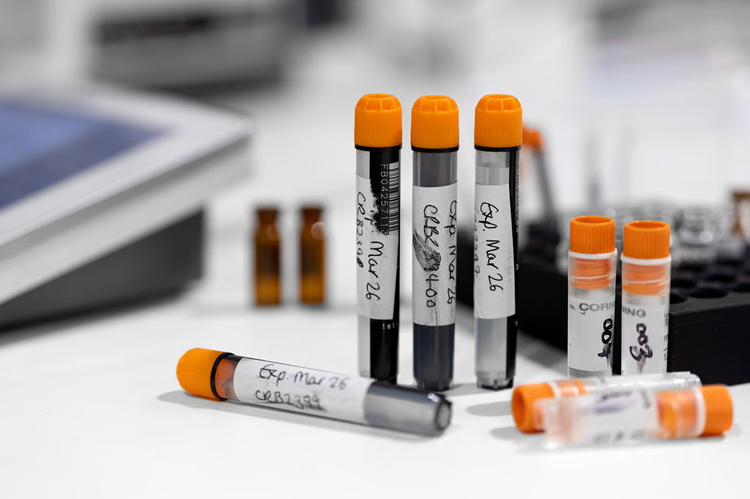
Image Credit: Labman
The label struggle
Manually writing or printing small labels for hundreds of vials is tedious, slow, and prone to mistakes. Labels can fall off, smear, or fade after exposure to freezing or autoclaving. The limited label space often forces people to invent short codes that others struggle to understand later.
The tracking nightmare
Barcodes that are too tiny or curved to scan correctly. Vials that vanish between preparation and analysis – or mysteriously reappear weeks later. Many labs still rely on spreadsheets as their “tracking system.” There is rarely a simple way to identify where…